RU
RU  EN
EN  FR
FR  DE
DE  ES
ES  AR
AR  JA
JA 
Look at a fresh-roasted coffee bag, and you’ll often spot a tiny dot on the surface — what looks like a mystery “hole.” It’s not a decorative element, and it’s not a simple breathing hole. That tiny device is a one-way degassing valve, playing a critical role in protecting freshness, safety, and flavor.
In this blog, Meishida, a leading pharmaceutical packaging manufacturer, explains what the vent actually does, why roasted coffee requires it, what happens without it, the common types of vents, and how to select the right vent-and-bag combination for your roast or product line.
What is the “Vent” on a Coffee Bag?
The “vent” you see is a one-way degassing valve. Mechanically simple but functionally vital, it allows gases (primarily CO₂) generated inside the sealed coffee bag to escape outward while preventing outside air — and contaminants — from re-entering. The valve is typically a small plastic component with a pressure-sensitive membrane: when internal pressure exceeds ambient pressure by a small margin, the membrane opens and releases gas; when pressure equalizes or becomes negative, the membrane snaps closed.
Important: this is not a passive hole. It is an active one-way system designed to protect the product inside.

Why Does Roasted Coffee Produce Gas
Roasting triggers chemical reactions inside the bean. During and after roasting, cell walls fracture, and the CO₂ formed during roasting continues to evolve from the bean for days or weeks. Key facts:
- CO₂ evolution is highest immediately after roast — the first 24–72 hours produce the most gas.
- Whole beans release gas more slowly than ground coffee, because grinding increases surface area and accelerates degassing.
- CO₂ affects flavor and extraction — freshly degassed beans brew differently; managing CO₂ is part of delivering consistent sensory quality.
If that gas is trapped inside a sealed coffee bag without an escape route, pressure builds—leading to swollen packages, compromised seals, or even ruptures.
What Happens if a Coffee Bag Has No Vent?
Several undesirable outcomes:
- Package bloating and deformation — the bag puffs up, making handling and stacking difficult.
- Seal failure or bursting — excessive internal pressure can break seals or seams.
- Faster flavor degradation — without a valve, brands sometimes try to prevent bloating by filling with less headspace or using stronger rigid packaging — but that can accelerate oxidation if air gets in.
- Consumer confusion — customers may think puffed bags are faulty, leading to complaints or returns.
In short, a vent is a low-cost device that prevents physical and sensory failure modes.
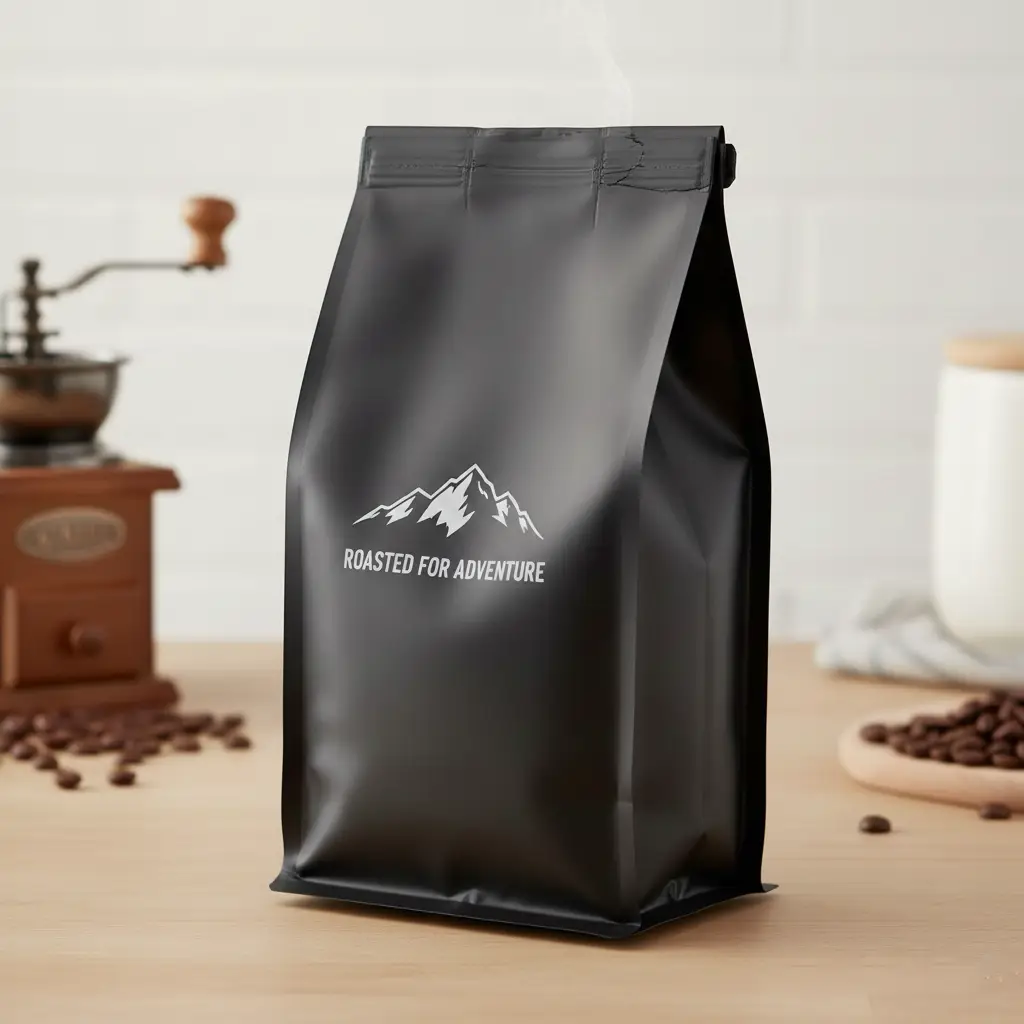
How Degassing Valves Work
Degassing valves operate on the principle of differential pressure. The roasted beans continuously produce CO₂; as pressure rises inside, the valve’s membrane flexes outward and releases gas. When pressure drops (or external pressure increases), the membrane reseals. The valve’s design ensures:
- Unidirectional flow (out only).
- Minimal oxygen ingress — the valve seals tightly against ambient air to protect the coffee from oxidation.
- Compatibility with barrier films — valves allow use of high-barrier laminates (foil/EVOH) that otherwise trap gas.
Well-designed valves maintain low oxygen transmission through the valve area and are rated for many open/close cycles during transport changes.
Common Types of Vents Used on Coffee Bags
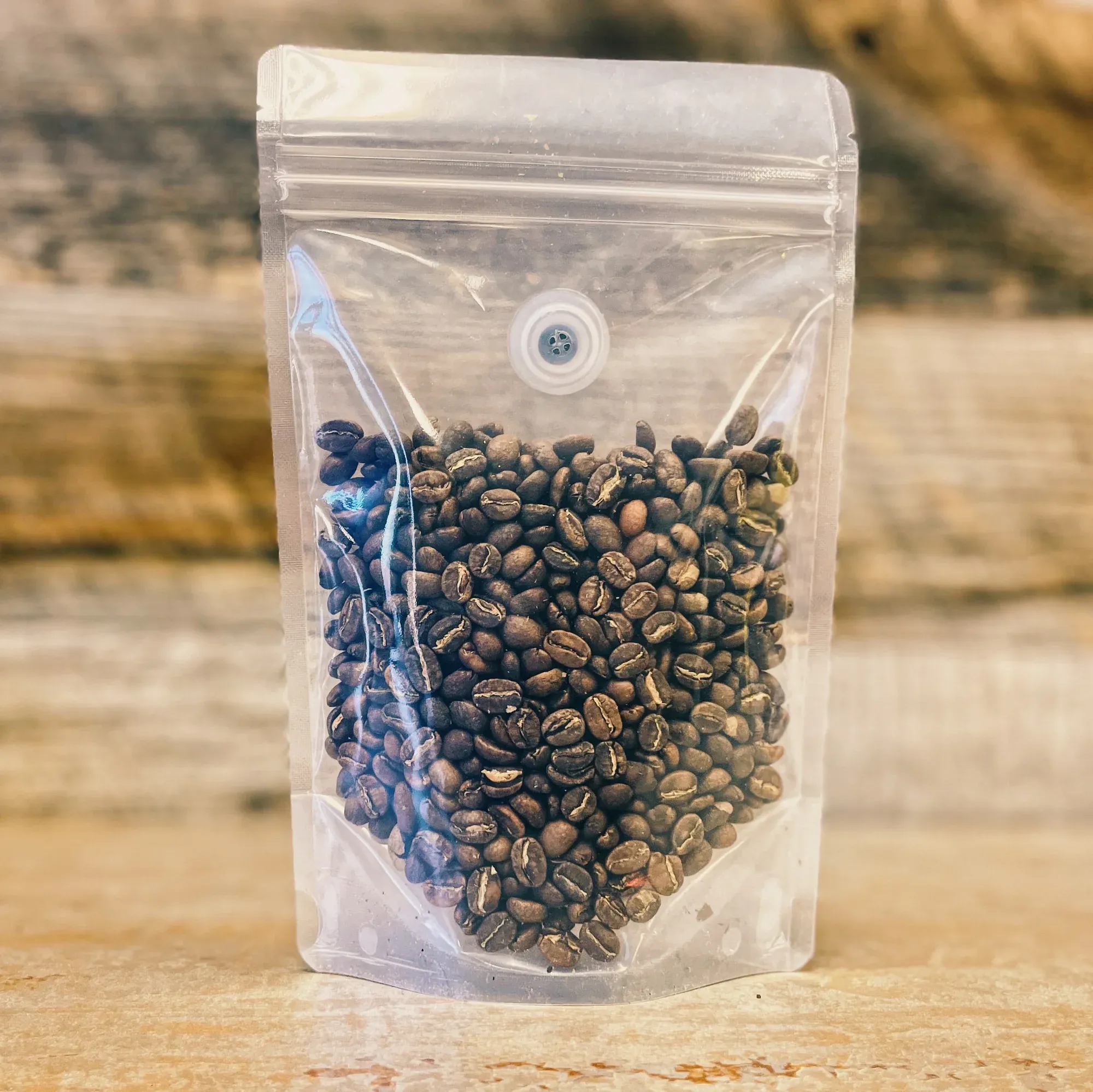
- External surface valve (adhesive-mounted)
- Attached to the outer bag surface after pouch forming.
- Easy to apply and compatible with many pouch geometries.
- Embedded / in-line valve
- Integrated into the inner liner layer during pouch forming for a cleaner look.
- Better protected from mechanical damage and tampering.
- Flush-mount valve
- Low-profile, sits nearly flush with the bag surface for automation and aesthetics.
- Laser-perforated valve systems (combined)
- Some designs use laser micro-perforations with a protective membrane to tune flow characteristics.
Each choice affects automation speed, cost, and aesthetic finish. For high-speed lines, embedded or flush valves that are compatible with applicators are preferred.
Do All Coffee Bags Need a Vent?
Not always. Factors that determine the need:
- Whole beans vs ground: Whole beans benefit most from valves; very coarse whole beans may degas more slowly. Ground coffee often needs valves even more.
- Roast-to-pack timing: Beans packed immediately after roast require valves; coffee rested before packaging may need less aggressive degassing.
- Shelf-life and transport: Long transport or storage increases pressure and the likelihood of bloating.
- Packaging material: Rigid cans tolerate internal pressure better (but can trap CO₂, altering headspace composition). Flexible high-barrier pouches + valve is often the best balance.
For most specialty roasters and retail whole-bean products, a degassing valve is recommended.
Recyclability and Sustainability Considerations
Valves are typically plastic components, and they complicate the recycling of multi-layer coffee bag laminates. Some important notes:
- Mixed-material challenges: Many high-barrier pouches are multilayer and already hard to recycle; adding a valve compounds the challenge.
- Design-for-recycling efforts: The industry is exploring mono-material pouches that work with one-way valves designed from compatible polymers, or detachable valve concepts to aid separation.
- Specialized recycling programs: Some collection schemes accept valve-equipped flexible films if processed by specialist streams.
If sustainability is a priority, talk to your packaging supplier about valve choices that minimize end-of-life impact and test local recycling compatibility.

How to Choose the Right Vent & Coffee Bag Combination
Consider these practical criteria:
- Roast profile and degassing rate — aggressive roasts and darker profiles often need higher-capacity vents.
- Filling timing — faster packing after roast requires more venting capacity.
- Product form — ground vs whole-bean and particle size.
- Transport & storage conditions — long sea freight or altitudinal shipment increases pressure differentials.
- Aesthetic and automation needs — embedded low-profile valves for premium appearance and fast lines.
- Sustainability targets — select valves and films that align with recycling goals.
Run pilot packs and pressure-rise tests: measure headspace pressure over time and ensure seals stay intact under expected handling conditions.
Final Recommendations
- Use a degassing valve on most retail whole-bean and ground coffee bag SKUs.
- Match valve flow capacity to roast and packing schedule.
- Prefer embedded or low-profile valves for automated high-speed production.
- Validate valve + pouch under worst-case transport simulations (temperature, altitude, vibration).
- Discuss recyclable valve options if sustainability is a brand priority.
Conclusion
That tiny vent on the coffee bag is a deliberately engineered component that protects the product’s aroma, prevents package failures, and preserves the customer experience. It’s a small investment with outsized returns in product stability and brand reputation.
О Мейшиде
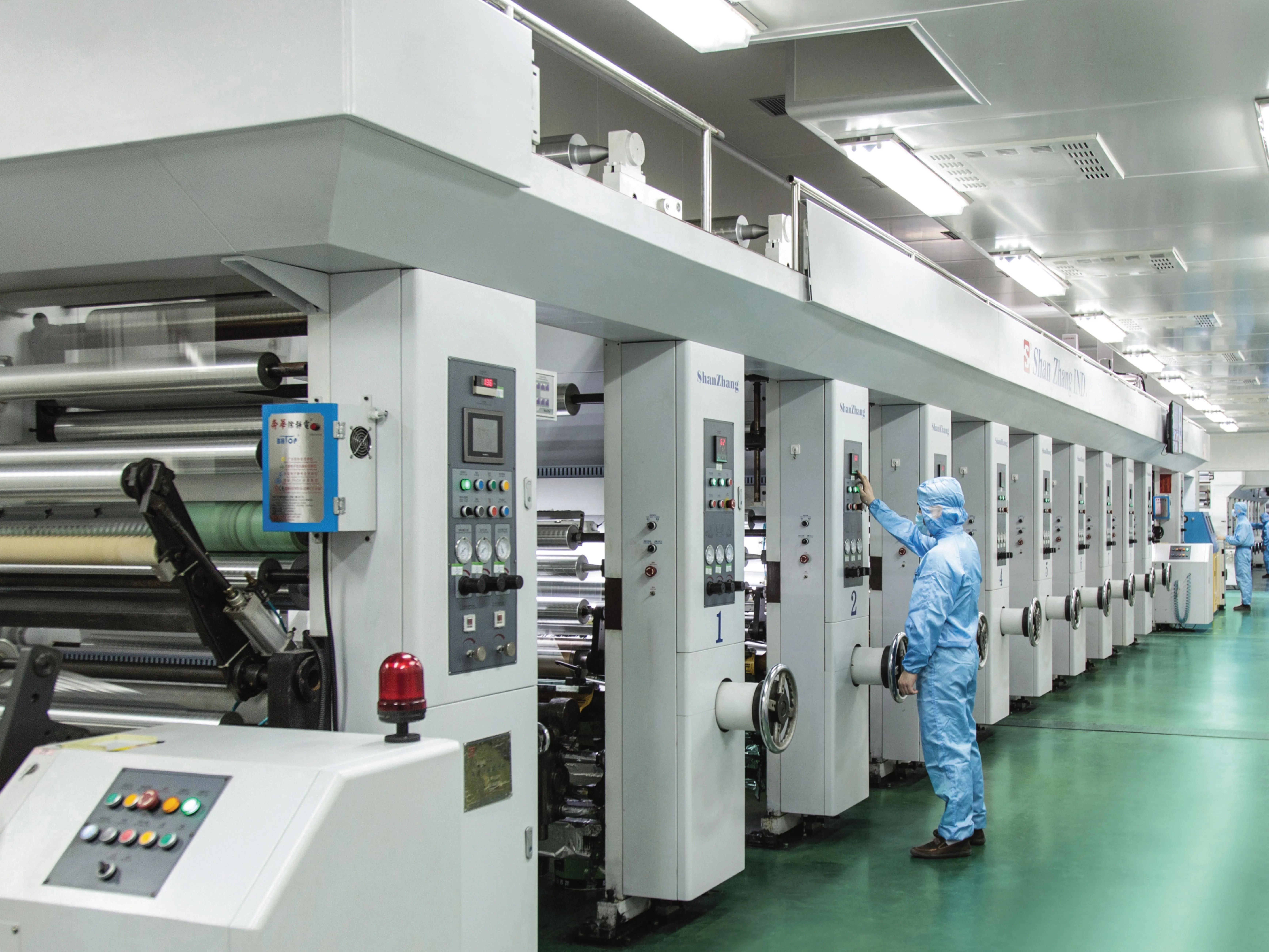
Meishida is a leading pharmaceutical packaging manufacturer, specializing in offering wholesale coffee bag supply and custom coffee bag solutions for global brands. We operate with internationally recognized safety standards and maintain rigorous production control to ensure consistent quality.
As a factory-direct partner, we deliver reliable materials, stable lead times, and packaging solutions tailored to real market needs.
Partner with Meishida, and you are provided:
✅Excellent quality
✅One-stop custom service
✅BRC, ISO, FDA certified products
✅Innovative technology support
✅Environmentally friendly philosophy
✅Quick expert team response